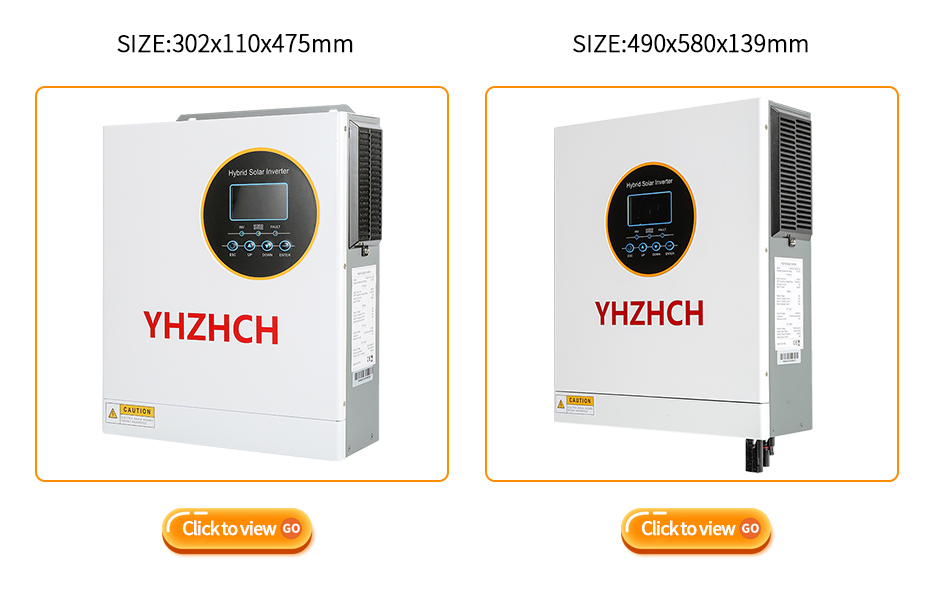
In household/commercial photovoltaic system, reliability > conversion efficiency; Only in the special scene of extreme electricity saving, extremely small space and extremely high electricity price, the efficiency weight will be raised.
Simple understanding:
Conversion efficiency: determines how much electricity can be generated by sunlight at one time, and affects the amount of electricity generated.
Reliability: determines whether the equipment can work stably for a long time, and affects whether it can generate electricity, be safe and save worry.
1. Why is reliability more important?
If it is broken, it will directly generate zero power.
Once the inverter fails, shuts down and burns out, it will not be able to generate electricity on the same day or even for several weeks.
No matter how efficient, no work = 0 gain.
The cost of maintenance/replacement is much higher than the loss of efficiency.
Inverter is the core component with the highest failure rate and the shortest life in photovoltaic system.
Frequent breakdowns, poor after-sales, discontinued production and no accessories will make you:
Power loss due to power failure
Home maintenance costs money
Overall system scrapping risk
potential safety hazard
Unreliable inverter may appear: over-temperature, leakage current, fire risk,
This is much more serious than "sending a few degrees less electricity".
System life is several times worse.
Photovoltaic panels can last for 25 years, while inverters usually only last for 5-10 years.
If the reliability is poor, it may be bad in 3 years;
Reliable brands can be used for more than 10 years, and the overall income gap is huge.
Second, the conversion efficiency is important, but it is not so "life and death level"
At present, the mainstream inverters are very efficient.
Generally 96% ~ 98.5%, the gap is 1% ~ 2%.
For household use, there is not a difference of tens to hundreds of electricity bills a year.
Key sequencing affecting power generation
Actual power generation:
Lighting conditions > installation angle shading > inverter MPPT tracking > conversion efficiency
Efficiency is only the last link.
There are only two situations where efficiency is worth taking seriously.
The site is very small, and the power generation per watt must be drained.
A large industrial and commercial power station has a high power yield and a huge scale, and the difference of 1% is hundreds of thousands.
Third, how to choose the most cost-effective?
Give you a directly available choice logic:
Give priority to reliability
Brand reputation and warranty period (5 years/10 years)
Failure rate, after-sales outlets, and whether there is local service.
Heat dissipation design, lightning protection and over-temperature protection
Look at efficiency again.
Household: Efficiency ≥96% is enough.
Pursuit of high matching: choose more than 97.5%, and don't have to spend a lot of money for 0.5%.
In a word:
I would rather buy a brand that is slightly inefficient but stable as a dog, than buy a miscellaneous brand that is inefficient but easy to break.
Fourth, a minimalist summary
Household Photovoltaic: Reliability First, Efficiency Second
Large industrial and commercial power stations: reliability is still a priority, and efficiency can be appropriately weighted.
Absolutely not: sacrifice stability and life for 1% ~ 2% efficiency.