Guide to the selection of portable power supply: three-step selection without stepping on the pit
Quick conclusion: First set the scene → then check the parameters → finally look at the safety and brand, and follow these three steps to easily find the portable power supply that suits you.
First, make clear the usage scenarios and electricity demand.
Key reminder: When calculating the total power of the equipment, be sure to reserve 20-30% margin to deal with the starting peak and energy loss.
Second, the depth analysis of core parameters (capacity, power, battery, interface)
1. Capacity: Wh is more accurate than mAh, and it is not wasted to choose as needed.
Small capacity (5000-10000mAh): suitable for daily commuting, and the mobile phone can be charged 2-4 times.
Medium capacity (20000mAh, about 77Wh): multi-device charging, which can be carried on board.
Large capacity (300-500Wh): short-distance camping, supporting small appliances.
Super capacity (1000Wh+): Long-distance outdoor, meeting the demand of high-power equipment.
Pit avoidance guide: only look at the rated capacity, not the marked capacity! Regular products must be marked with rated capacity (mAh/5V), which is the real available electricity.
2. Power: Decide what equipment can be driven.
Below 100W: Only low-power devices such as mobile phones and tablets can be charged.
300-500W: It can drive small household appliances such as projectors and small fans.
1000W: can drive most small household appliances (rice cookers, electric kettles, etc.)
2000W+: It can drive high-power equipment such as electric ovens and coffee makers.
Important formula: Maximum equipment power ×1.2 (safety factor) ≤ rated output power of power supply to ensure stable operation of equipment.
3. Battery type: the core of safety and life.
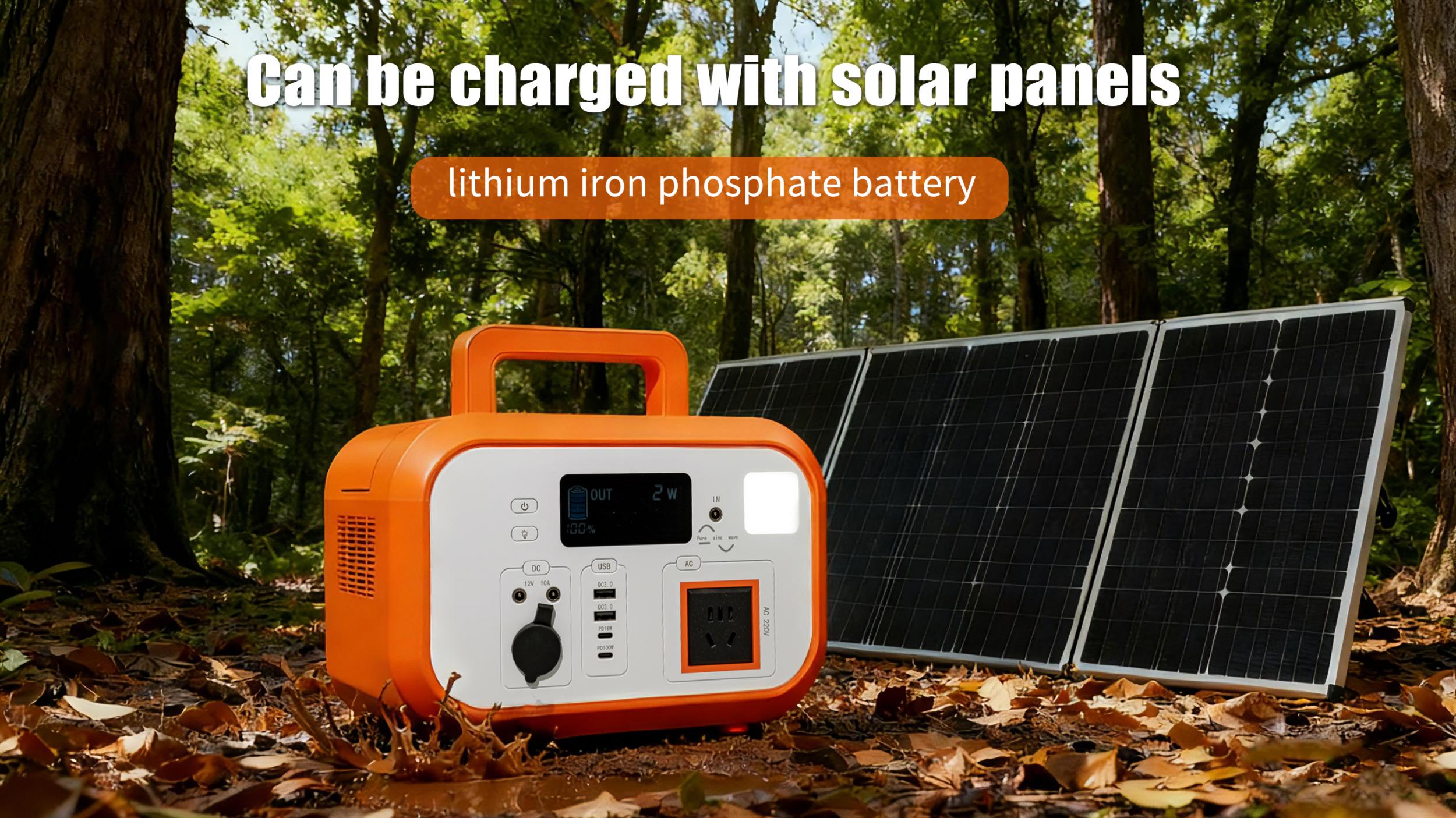
Recommended: lithium iron phosphate battery is preferred for outdoor use and long-term standby, which is safe, durable and worry-free.
4. Interface configuration: matching equipment requirements
Required interface:
USB-A: compatible with old equipment, supporting QC fast charging.
USB-C (PD): supports 65W+fast charging, and can be used to charge notebook computers.
AC output (220V): Connect household appliances (necessary for high-power power supply).
DC output: suitable for vehicle-mounted equipment, lamps, etc.
Bonus interface:
Wireless charging: convenient for mobile phone charging.
Solar energy input: outdoor sustainable energy supply
Car charging interface: car scene is more convenient
Third, safety and brand: a key factor that cannot be ignored
1. Safety certification: The bottom line cannot be broken.
3C certification (GB31241-2014): China compulsory safety certification must pass 30+tests such as overcharge, overdischarge and short circuit.
Other certifications: international certifications such as UL, CE and FCC, which are suitable for foreign trade needs.
Safety protection functions: over-voltage, over-current, over-temperature, short circuit and reverse connection protection, all of which are indispensable.
2. Brand selection: after-sales and quality assurance
Brand: Yunhai Zhicheng brand products with mature technology and perfect after-sales service.
Avoid Pit Reminder: Be wary of propaganda such as "small and large capacity" and "low price and high power". 40% of the products have virtual capacity standards, and the most serious is only 20.5% of the nominal value.
3. Charging method: the convenience of recharging energy
Mains charging: the most common, and the charging time varies from 3 to 12 hours.
Solar charging: outdoor necessary, the power supply supporting 600W+input can be fully charged in 3 hours.
On-board charging: recharge energy during self-driving, suitable for emergency.
Fast charging technology: Yunhai fast charging, which can fully charge large batteries in 1.5 hours.
Four, the purchase of practical steps (in order)
List all electrical equipment, and record their respective power and service time.
Calculate the total power: the maximum power of a single device ×1.2+the sum of other devices' power.
Determine the capacity: calculate the required Wh value according to the total power × service time× 1.3 (loss coefficient).
Select battery type: choose lithium ternary or Ferrous lithium phosphate according to the scene.
Check the interface: ensure that the charging requirements of all devices are covered.
Check safety certification: 3C certification is required, and products with international certification are preferred.
Brand and after-sales: Choose brands with more than 2 years warranty and many after-sales outlets.
Five, common misunderstandings and pit avoidance skills
Look only at mAh and not Wh: mah is only applicable to 5V equipment, and the real capacity of high-power power supply must be calculated by wh.
Ignoring the starting power: the starting power of motor equipment (such as refrigerator and water pump) is 2-3 times of the rated power, so sufficient margin should be reserved.
Blind pursuit of large capacity: the larger the capacity, the heavier the weight, and the daily use may cause a burden.
Ignoring the charging efficiency: the conversion efficiency of high-quality power supply can reach more than 85%, and the inferior product is only 60-70%, and the actual usable capacity is greatly reduced.
Forget portability: When used outdoors, the weight and volume of the power supply directly affect the travel experience.
Sixth, the scene recommendation
Daily commuters: 10000mAh (37Wh), 65W PD fast charging, light and portable models, such as Anker 535 mobile power supply.
Weekend camping party: 1000W, 1000Wh, Ferrous lithium phosphate, support solar charging, such as electric battery 1000Pro2.
Long-distance self-driving enthusiasts: 2000W, 2000Wh, 220V AC output, vehicle charging+solar energy, such as Zhenghaode 2 Max.
Home emergency standby: 1500W, 1500Wh, UPS function, silent design, such as Platinum AC200P.
Last reminder: portable power supply belongs to special electronic products, so don't buy "three no" products cheaply, and safety is always the first! Choosing according to the above guidelines can not only meet the demand for electricity, but also ensure the safety of use.


