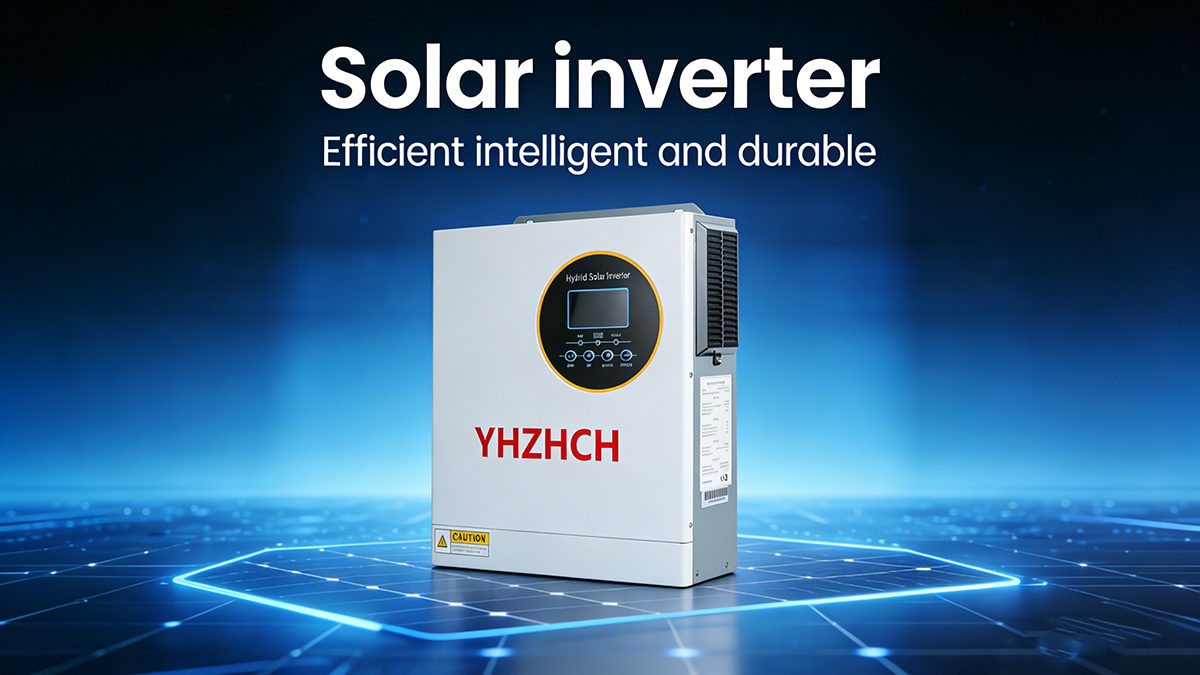
The global compound annual growth rate of solar inverter market is about 6.79%-15%, with the integration of optical storage and networking technology as the core increment point, and China enterprises continue to lead the world. The following points are analyzed:
I. Core drivers
Policy and energy transformation: driven by the global "double carbon" goal, China's "peak carbon dioxide emissions Action Plan before 2030", EU REPowerEU, American IRA follow-up policy (although it has retreated, it still has support), etc., the increase in the proportion of non-fossil energy consumption forces the growth of photovoltaic installed capacity, which directly drives the demand for inverters.
The outbreak of optical storage integration: the energy storage inverter has become the growth engine, and the penetration rate of two-way inverter and DC-coupled optical storage scheme has increased. In 2030, the market share of optical storage integrated inverter may reach 45%; Household and industrial and commercial distributed photovoltaic capacity expansion, micro inverter growth rate reached 7.96%, higher than the industry average.
Technical iteration to reduce costs and increase efficiency: the large-scale series inverter (400kW+), the popularization of 1500V system and the application of GaN/SiC devices have improved the conversion efficiency to 98%+, and the cost of kilowatt-hour has been continuously reduced, thus enhancing the project economy.
Stock replacement demand: The early inverter (installed in 2010-2015) gradually entered the end of its 10-15-year life, and the global stock replacement demand exceeded 50GW annually from 2026 to 2030, becoming a steady increase.
II. Major Challenges and Risks
Intensified market competition: in 2025, the average gross profit margin of the industry will drop to about 20%; Core devices such as IGBT chips are highly dependent on imports (about 65%), and the risk of cost fluctuation is high.
Regional market differentiation: European stocks are high, electricity prices are lowered, and shipments will continue to decline in 2026; The decline of IRA in the United States led to a 22% decline in shipments in 2026; Although emerging markets such as Southeast Asia and the Middle East are growing, their bases are small and trade barriers are increasing.
Technical and compliance threshold: the grid has higher requirements for grid structure (GFM), low voltage ride-through and data encryption of inverters, and increased investment in research and development; National certification standards (such as EU CE and US UL) are becoming stricter.
Third, the competition pattern
Head concentration: The top ten companies in the world account for 71% of the market share, with Huawei (about 30%) and Sunshine Power (about 23%) leading the way, followed by European companies such as SMA and Fronius, and the competition shifted from price to technology, service and supply chain resilience.
China enterprises go to sea: With the advantages of cost and technology, China's inverter exports account for over 60%, and Europe and Southeast Asia are the main markets, with the export volume of 130GW in 2023, up 40% year-on-year.
Breakthrough in subdivided tracks: Micro-inverters (Yuneng, Enphase), energy storage inverters (Goodway, Jinlang Technology) and other subdivided fields have increased rapidly, and the head enterprises have accelerated their layout and formed differentiated competition.
Iv. prospect judgment and suggestions
The demand for inverters will increase steadily with the growth of photovoltaic installed capacity. Increase the research and development of optical storage integration and networking technology, expand emerging markets such as Southeast Asia and the Middle East, optimize the supply chain, reduce the dependence on core devices, and enhance the ability of overseas certification and localization services.


