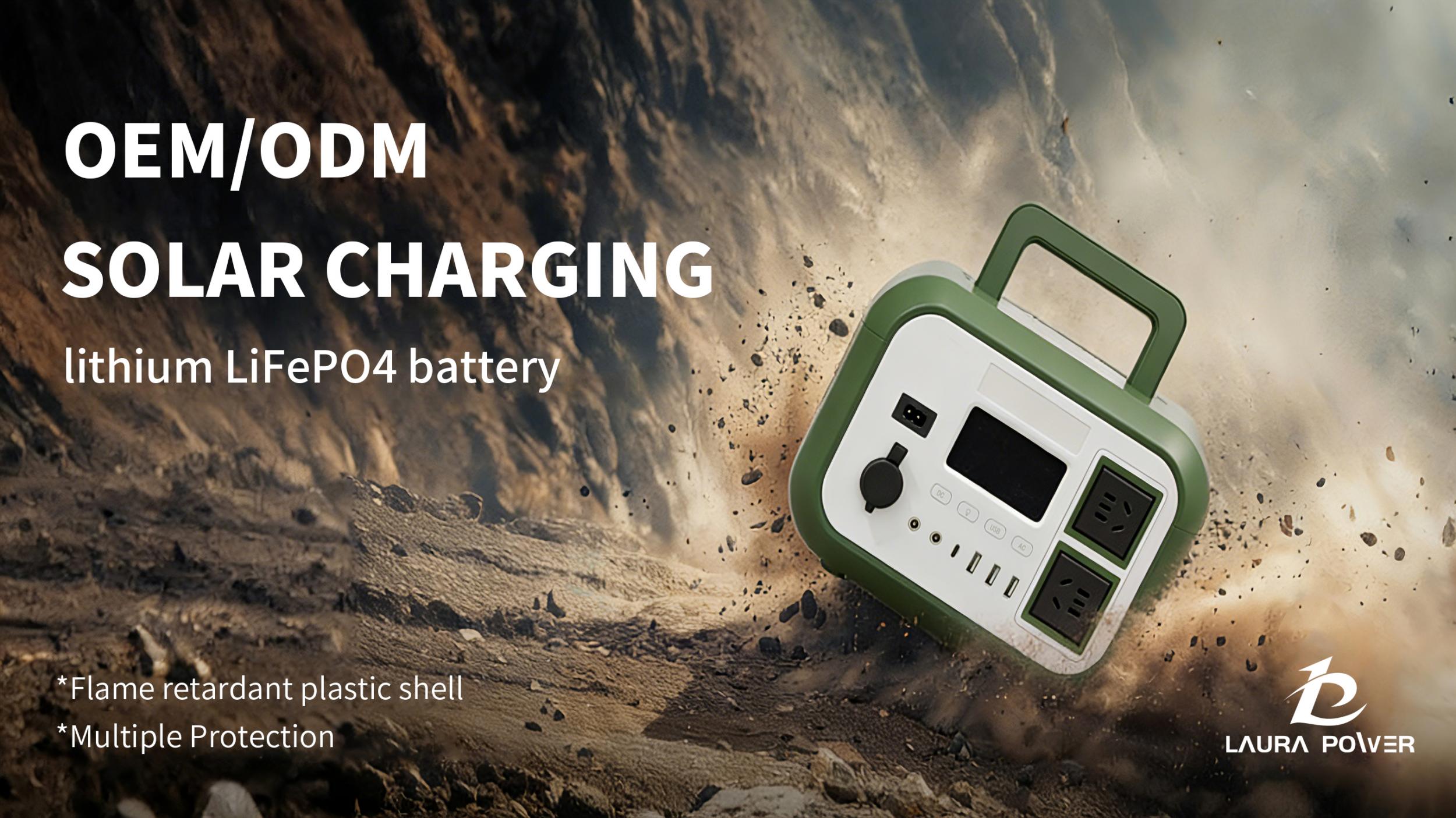
When purchasing a portable power supply, it is necessary to consider the capacity, power, interface, battery type, additional functions and other dimensions in combination with its own usage scenarios and core requirements, as follows:
Core performance parameters
Low power equipment (mobile phone, tablet, small fan): output within 100W;
Medium power equipment (notebook, projector, car refrigerator): pure sine wave output of 200W-600W is required;
High-power equipment (induction cooker, electric drill, coffee machine): it needs more than 1000W, and the model that supports peak power (can carry higher power in a short time) is preferred.
Daily commuting/emergency (mobile phone, earphone charging): choose a portable model within 100Wh (which can be taken directly to the plane) and 5000-20000mAh;
Outdoor camping/vehicle equipment: choose 500Wh-2000Wh, which can drive small refrigerators, projectors, etc.
Household emergency/high-power equipment: above 2000Wh, some of which can be used as home standby power supply.
battery capacity
Capacity is the core index to determine the endurance, and the unit is usually Wh (watt-hour) (which can directly measure the amount of electric energy) or mAh (which needs to be converted into Wh in combination with voltage, and the formula is Wh=mAh× voltage ÷1000).
output rating
Power determines which equipment can be driven, and it needs to match the rated power of the equipment (it is recommended to reserve 20%-30% redundancy to avoid overload).
Interface configuration
The number and types of interfaces shall cover all the equipment to be powered, so as to avoid the trouble of transfer:
DC interface: USB-A (supporting QC/PD fast charging), USB-C (giving priority to two-way fast charging of 100W and above, which can charge the power supply itself and the notebook), DC interface and vehicle charging interface, meeting the needs of low-power equipment such as mobile phones, tablets and vehicle-mounted equipment;
AC interface: Pure sine wave (stable output current, compatible with precision equipment such as notebook and ventilator) is preferred, so as to avoid correcting sine wave (which may damage sensitive appliances), and the number is recommended to be more than two, so as to meet the requirement of simultaneous power supply for multiple devices.
Battery type
The safety, life and cost of different batteries are quite different, and there are two main types:
Advantages: high energy density, small size and light weight, suitable for portable scenes;
Breakdown: LiFePO4 (lithium iron phosphate battery) has higher safety (high temperature resistance and fire resistance) and long cycle life (2000-3000 cycles), but the energy density is slightly lower; Ternary lithium battery has high energy density and light weight, but its high-temperature stability is slightly weak, so it is suitable for scenes that require high portability.
Lithium ion battery:
Lead-acid battery: low cost, large capacity, but heavy weight and short life (300-500 cycles), only suitable for fixed emergency scenarios, not recommended for portable use.
Charging mode
Flexible charging method can improve the convenience of use;
Basic mode: charging with commercial power (220V) is the most common way to replenish energy, and attention should be paid to the charging time (for example, the 1000Wh power supply is fully charged for 6-12 hours at the normal level);
Outdoor mode: solar charging (need to match photovoltaic panels, pay attention to whether to support MPPT fast charging protocol to improve charging efficiency), car charging (12V car charging interface, suitable for self-driving scenes);
Emergency mode: Some models support PD fast charging and reverse self-charging, which can be quickly recharged by laptop charger.
Additional features and details
Safety: Overcharge, overdischarge, short circuit, overtemperature and overload protection are required, and lithium iron phosphate battery can also pay extra attention to the protection level of BMS (Battery Management System);
Portability: Pay attention to the weight (the weight of 1000Wh power supply is usually 10-20kg), whether to bring a handle/roller, and give priority to lightweight models for outdoor scenes;
Intelligent functions: support APP monitoring (check the remaining power and charging status), LED lighting (emergency lighting), UPS uninterrupted power supply (seamlessly switch when power is cut off, protect the data of computers and other equipment);
Certification and after-sale: brands with 3C and UL safety certification are preferred, and the after-sale warranty period is long (lithium iron phosphate battery is recommended to be guaranteed for more than 5 years).
Scene adaptability
Air travel: it is required to comply with civil aviation regulations. If the capacity is ≤100Wh, you can board the plane directly, and you need to apply in advance for 100Wh-160Wh.
Outdoor camping: give priority to the models with high capacity, multi-interface, solar charging support and lighting;
Family emergency: Ferrous lithium phosphate model with high power, UPS function and long cycle life;
On-board scene: it needs to be equipped with a car charging input/output interface, and the volume is suitable for the trunk space.


