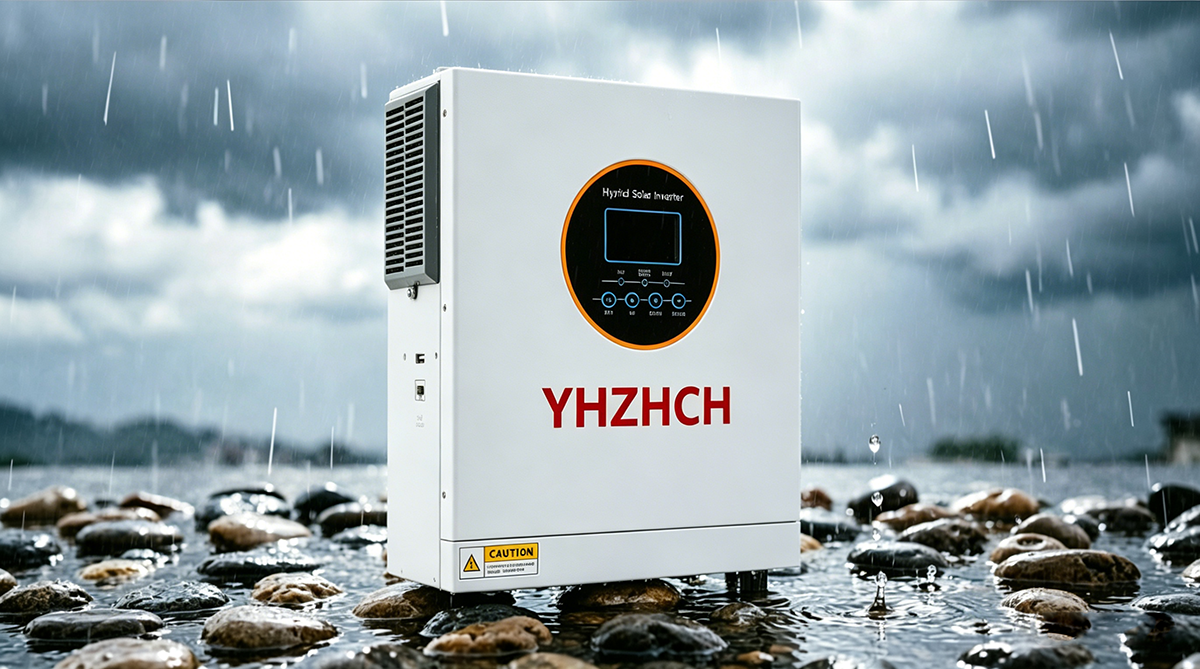
Main advantages of adaptive adaptation strategy for environmental parameters of # solar inverter
1. ** Improve power generation and power generation efficiency * *
Real-time perception of irradiation, temperature, shadow and other environments, dynamic adjustment of MPPT tracking step size and voltage compensation parameters, it is not easy to deviate from the maximum power point under cloudy, shaded, weak light in the morning and evening, high and low temperatures; Compared with the fixed parameter scheme, it can reduce the tracking loss and improve the annual power generation. In local shadow scene, global MPPT adaptation can also avoid falling into local power peak.
2. ** Wide-range environment adaptation, reducing downtime probability * *
Different from the traditional fixed protection threshold and direct hard shutdown; Adopt * * flexible grading load shedding and adaptive protection threshold * *. At high temperature, limit power gently instead of stopping directly; Adaptive preheating and correction of open circuit voltage parameters at low temperature to improve the success rate of low temperature start-up; Adapt to complex sites such as high altitude, large temperature difference, dust and salt fog, and expand the stable operation interval.
3. ** Improve thermal management and prolong equipment life * *
According to the junction temperature and ambient temperature of the device, the rotating speed, switching frequency and output power of the cooling fan are dynamically adjusted, so as to reduce the temperature fluctuation range of power devices, reduce the thermal cycle stress, slow down the aging of core devices such as IGBT and capacitor, and prolong the service life of inverters and photovoltaic modules. The heat dissipation can be adjusted as required, which also reduces the power consumption of the inverter's own auxiliary machine.
4. ** The output is more stable, friendly and suitable for distribution network * *
When the illumination fluctuates violently, the output of active and reactive power can be adjusted adaptively to suppress voltage and power flicker; Dynamically adapt to the fluctuation of voltage and frequency of distribution network, meet the grid-connected specifications, reduce the impact on distribution network, improve the stability of grid-connected points, and support the stable operation of weak current network scenarios.
5. ** Reduce operation and maintenance costs and reduce manual intervention * *
Parameters can be automatically set online, and there is no need for operation and maintenance personnel to manually modify MPPT, protection and temperature control parameters with the change of season, weather and site; It can buffer and suppress anomalies in advance, reduce the times of fault reporting and on-site investigation, and is suitable for mountainous, desert, distributed and other decentralized power stations.
6. ** Strong robustness and better fault tolerance * *
It can adapt to time-varying working conditions such as component attenuation, inconsistent assembly and string, and random change of shielding; The algorithm can distinguish between temporary cloud cover and permanent attenuation, avoid false power reduction and false protection, control logic is self-adjusting, and has certain tolerance to model deviation and small sensor error.
7. ** Conducive to digitalization and intelligent coordination of power stations * *
Adaptive strategy is generally matched with sensor acquisition and data closed-loop, which can predict power generation and cluster collaborative control of the docking platform, and provide control basis for optical storage collaboration and virtual power plant.


