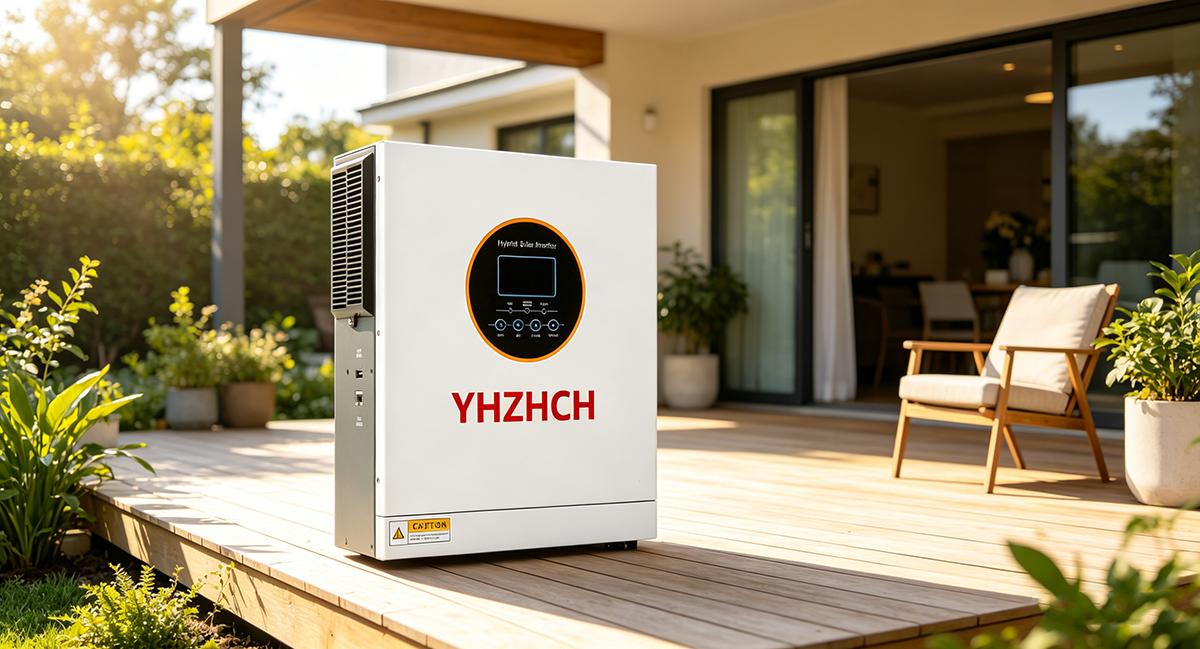
Typical application scenarios of temperature adaptive control strategy for solar inverter
Temperature adaptive control core: real-time monitoring of power device/environment temperature, dynamic adjustment of fan speed, PWM switching frequency, output power load shedding threshold and MPPT parameters, taking into account power generation efficiency, heat dissipation power consumption and device life, and avoiding hard overheating shutdown.
I. Large-scale ground photovoltaic power station
Desert/Gobi high-temperature centralized photovoltaic
In summer, the ambient temperature is extremely high, and the heat accumulation in the inverter closed cabinet is serious, which is easy to trigger overheating forced derating. Adaptive temperature control realizes flexible step-by-step load reduction, intelligent speed regulation and heat dissipation, and reduces power generation loss; At the same time, the long-term full-rotation wear of the fan is reduced.
High altitude mountain photovoltaic (western Sichuan, Xizang, Qinghai)
Great temperature difference between day and night, thin air and poor heat dissipation; It is hot during the day and extremely cold at night. The adaptive strategy dynamically modifies the high and low temperature protection threshold to suppress the thermal stress damage caused by alternating cold and hot.
Second, the distributed photovoltaic scene
Industrial and commercial roof group series inverter
The roof is sealed, exposed in summer, and many inverters are installed intensively, with poor ventilation and serious heat reflux. High power density inverter has high heat flux density; Self-adaptive temperature control optimizes heat dissipation to avoid high temperature and power reduction in batches in the afternoon.
Household photovoltaic inverter
The installation space is narrow and the environment is changeable; Require low noise. The algorithm smoothly adjusts the fan according to the temperature, reduces the start-stop noise, and gives consideration to the home experience and reliability.
Third, the optical storage integrated system (focus, related to the portable energy storage/power station you studied before)
Grid-connected optical storage inverter (PCS)
Photovoltaic+energy storage bidirectional converter, charging and discharging bidirectional operation has large heating fluctuation; The load is frequently switched, and the temperature rise changes dramatically. Temperature self-adaptive dynamic limit maximum charge and discharge power, protect power devices.
Off-grid/portable energy storage inverter (Portable Power Station outdoor energy storage power supply)
Outdoor camping, emergency power supply, no fixed computer room; Exposure in summer, poor heat dissipation condition of closed shell, and random load change. Temperature adaptive flexible power limit to prevent sudden power failure of overheating protection.
Fourth, special mobile and offshore photovoltaic
On-board photovoltaic inverter system for ship/RV
High sun temperature on deck, unstable ventilation and dynamic load change; Compact space and limited heat dissipation, suitable for temperature adaptive thermal management.
Offshore/beach photovoltaic inverter
High temperature and high humidity salt spray make the device age faster; Temperature control strategy can avoid long-term high temperature accelerating corrosion and aging, and prolong the service life of equipment.
V. Microgrid and Off-grid Independent Photovoltaic System
Off-grid photovoltaic in remote pastoral areas, field base stations and mines. Without a stable power grid, once the inverter stops, it will directly cause the load to be cut off; Traditional fixed threshold is easy to stop across the board. Temperature self-adaptation adopts gentle load shedding priority and shutdown to ensure continuous power supply to the maximum extent.
Six, high temperature closed integrated equipment scene
Container type energy storage cabin, integrated photovoltaic inverter cabin. The cabin space is closed, multiple heat sources are coupled with each other, and the cabin temperature continues to be high; Relying on temperature self-adaptation to control the cooling fan, limit the power of the whole machine and balance the thermal environment in the cabin.
Adaptive temperature control is most suitable for inverter scenarios with severe environmental temperature fluctuation, limited heat dissipation conditions, dynamic load change and frequent direct shutdown, including desert ground photovoltaic, industrial and commercial rooftop photovoltaic, optical storage PCS, off-grid microgrid, vehicle/portable energy storage inverter, marine photovoltaic and container energy storage system.


