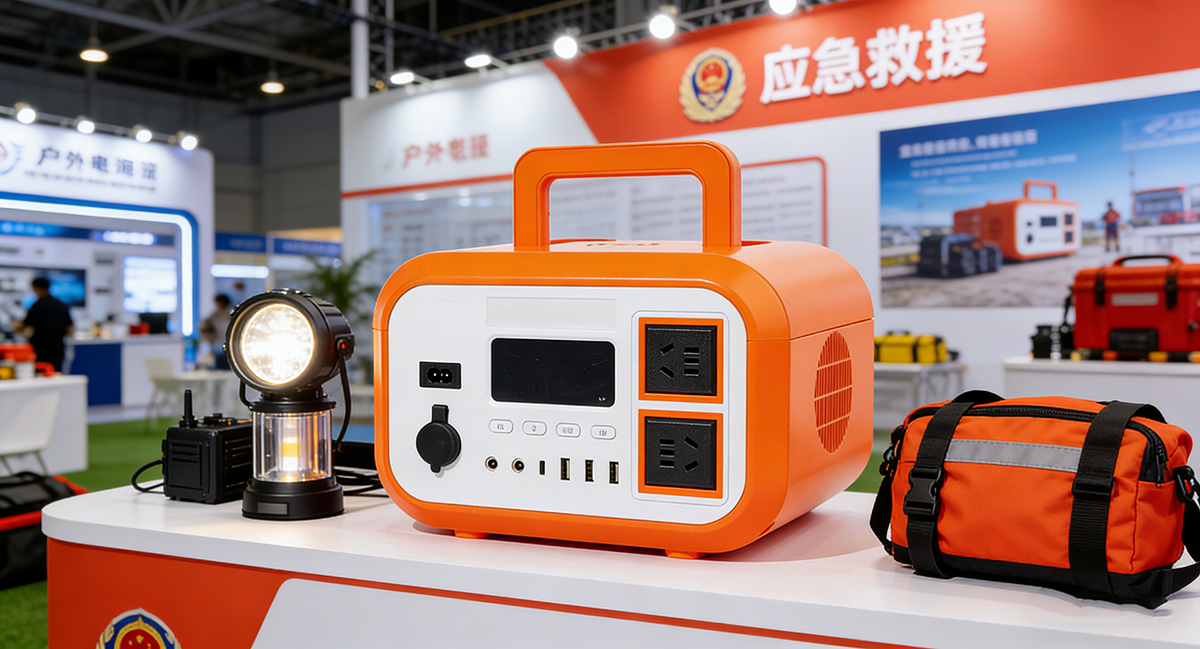
Harm of unstable output current of mains charger to portable power supply (outdoor energy storage/charging treasure)
Firstly, there are two scenarios: the output ripple of the charger itself is large and the current jumps; The fluctuation of mains voltage causes the charging current to increase and decrease, and the consequences are basically the same, from light to heavy as follows:
First, the short-term intuitive impact
The charging speed is fast and slow, and the charging is insufficient and empty.
The charging chip is recharged by constant current/constant voltage logic, and frequent current fluctuation will make the power management IC misjudge the power:
In the constant current stage, the current drops sharply and the charging time is greatly prolonged;
At the constant voltage stage, the current jumps, and the system determines that it is "fully charged" in advance. The actual battery is only charged to 90% ~ 95%, and the battery life is shortened after being unplugged.
Frequent start and stop, repeated skip charging
Current is too low/instantaneous cut off → portable power determines that the charger is disconnected and stops charging; The current is restored and the charging is restarted.
The screen is turned on and off repeatedly, and the fan is turned on and off frequently, so the experience is poor.
Abnormal fever, local burning
The sharp fluctuation of current will produce a lot of ripple loss, and the internal boost/buck MOS tube, charging management chip and battery protection board of portable power supply will heat up. The charger itself also synchronizes the high temperature.
2. Long-term damage to lithium battery cells (most critical)
The inside of the portable power supply is a series of lithium polymer/lithium iron phosphate batteries, which requires high stability of charging current:
The battery cell pressure difference is rapidly widened, and the scrapping of the whole battery is accelerated.
The charging current is large and small, and the energy received by each string of batteries is uneven:
Some strings are overcharged and some are underfilled;
BMS equalization circuit can only be fine-tuned with small current, which can't keep up with violent current fluctuation, and the voltage difference exceeds the standard after several rounds of charging;
When the pressure difference exceeds 0.1V, the power supply will automatically limit the power and drop the load, so that the power cannot be output directly.
Accelerate the aging of batteries and increase the risk of bulging.
Frequent current shock will damage SEI film of lithium battery;
Lithium precipitates to form dendrites, and the internal resistance increases rapidly;
Heat superposition local overcharge, liquid electrolyte decomposition gas production, battery bulging;
Lithium ternary is more afraid of the impact of current fluctuation than Ferrous lithium phosphate.
Cycle life is greatly reduced.
Stable constant current charging is the best working condition of the battery; Current jitter belongs to pulse impulse charging. At the same frequency, the battery cycle life may be damaged by 30% ~ 50%.
Three, damage to the internal circuit and protection system
Charging management chip and BMS protection board burned out.
The current fluctuates violently with spikes, and the charger without high-quality filtering will output high-voltage spikes:
Breakdown charging IC, voltage dividing resistor and sampling resistor;
The sampling resistor can't be charged directly because of the instantaneous high current overheating and fusing.
False triggering of protection logic, machine locking protection
BMS has built-in over-current, over-voltage and over-temperature protection, and frequent current jumps will be misjudged as short circuit/over-current:
Protection against sudden power failure during charging;
Frequent misoperation will make BMS program go wrong, and the whole machine will be locked directly, so it can only be disassembled and unlocked.
Filter capacitor aging bulge
The electrolytic capacitor at the input end of portable power supply is used to smooth the current. The continuous large ripple current will make the capacitor heat up, the electrolyte dry up and the capacity decay, further aggravating the input instability and forming a vicious circle.
Fourth, extreme security risks
Uneven internal resistance of the battery cell+continuous heating, and there is a risk of thermal runaway (bulging, liquid leakage and fire);
Input circuit components are short-circuited, and there is a risk of short-circuit burning adapter and tripping when plugging in;
The inferior unstable charger is superimposed with inferior portable power supply, which may lead to spontaneous combustion of the fuselage during charging.
Supplementary distinction between two kinds of "current instability"
Power grid fluctuation (voltage fluctuation)
The qualified charger can stabilize the output current automatically with almost no influence. Old, unstable and cheap chargers will fluctuate accordingly.
The charger itself is faulty (capacitor bulging, transformer damage, feedback circuit failure).
The output ripple is huge and the current jumps irregularly, which will inevitably damage the portable power supply for a long time. It is recommended to replace the charger directly.
Simple coping scheme
Stop using the faulty charger with obvious current fluctuation, burning and abnormal sound;
Preference is given to the adapter with original factory matching, PFC active voltage stabilization and low ripple;
In areas with unstable mains supply, it can be matched with plug-in/regulated power supply with voltage regulation function to reduce input fluctuation;
Check the battery cell voltage difference of portable power supply regularly. If the voltage difference becomes larger, reduce the fast charging and replace the stable charger.


