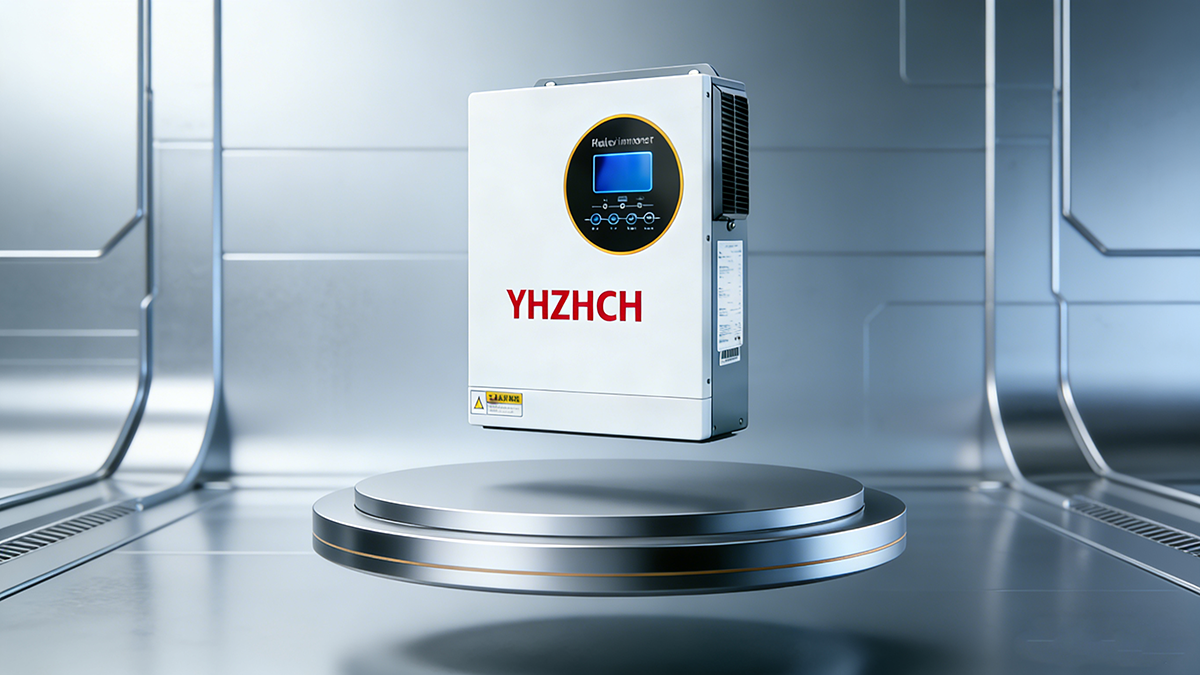
The solar inverter is being upgraded from a single electric energy conversion device to high power density, wide band gap devices, network structure, optical storage integration, module-level power electronics, intelligence and high reliability to meet the needs of high proportion of new energy grid-connected and distributed energy systems.
1. Power devices and topology: wide band gap+multilevel, and the efficiency approaches the limit.
Full penetration of silicon carbide (SiC): Compared with silicon-based IGBT, the switching loss of SiC device is reduced by 70%+, and it is resistant to high temperature and high voltage, which makes the efficiency of centralized inverter reach 99.0%–99.2%, and the efficiency of tandem type in Europe exceeds 98.8%, and significantly improves the power density.
Topology upgrade: centralized to three-level, NPC/TNPC evolution; Multi-level, modular optimization in series, single MPPT current increased to 40A+, suitable for high-power components.
Power density and volume: The series power density exceeds 80W/kg, and the volume is reduced by 30%+ compared with 2023, and the installation and transportation costs are greatly reduced.
Second, the power grid interaction: from "following the network" to "constructing the network", actively support the power grid.
Grid‑forming has become the mainstream: the inverter changes from current source to voltage source, which can independently control voltage/frequency, provide inertia support, black start and fault ride-through, and solve the stability problem of power grid under high proportion of photovoltaic.
Strong grid adaptability: it supports voltage/frequency regulation, reactive power control and dynamic power limiting, meets the strict grid-connected standards of various countries, and becomes the standard for large power stations and microgrids.
Virtual Power Plant (VPP) is ready: with built-in protocols such as IEEE 2030.5 and CSIP, it supports remote dispatching and participates in auxiliary services, and becomes the core node of distributed energy aggregation.
Third, architecture and application: optical storage integration+component-level power electronics, full coverage of the scene
Hybrid outbreak: the inverter has built-in energy storage interface, which realizes spontaneous self-use, peak-valley arbitrage and standby power supply, and improves the flexibility and economy of the system, which is the mainstream direction of household/industry and commerce.
The rapid growth of Microinverter: component-level MPPT, which completely eliminates the "barrel effect" and increases the power generation by 15%–20% under shielding; Long service life, easy expansion and safety, and the penetration rate of household and distributed scenes continues to increase.
Centralized high-power: the single machine capacity is upgraded to 350 kW–6.8 MW, and the high voltage direct current (HV‑DC) scheme reduces the line loss, which is suitable for large-scale ground power stations and wind and solar storage bases.
Fourth, intelligence and digitalization: AI+IoT, life cycle management
AI-driven intelligent control: real-time data acquisition, predictive maintenance, fault self-diagnosis, adaptive MPPT, reducing operation and maintenance costs and improving usability.
Full-link digitization: Support remote monitoring, OTA firmware upgrade and digital twinning, and realize "unattended" and rapid iteration.
Multi-energy collaboration: linking with energy storage, charging piles and load management, building a home/park energy management system (EMS).
V. Reliability and safety: long life+high protection, matching the whole life cycle of the power station.
Design life extension: from 10–15 years to 20 years+,matching the life of photovoltaic modules.
Heat dissipation and environmental adaptability: evolution from air cooling to phase change heat dissipation, full enclosure and liquid cooling, adapting to extreme environments such as desert and coastal areas.
Safety standard upgrade: strengthen arc protection, PID suppression, quick shutdown and fire prevention to meet more stringent safety requirements.
6. Cost and supply chain: localization+cost reduction, and promotion of affordable Internet access.
Localization of core devices: IGBT, SiC module, inductor and capacitor, etc. accelerate domestic substitution, ease supply chain risks and reduce BOM cost.
Extreme cost reduction: through integrated, modular and automated production, the cost per watt will be continuously reduced, and photovoltaic will be supported to go online from "parity" to "low price".


