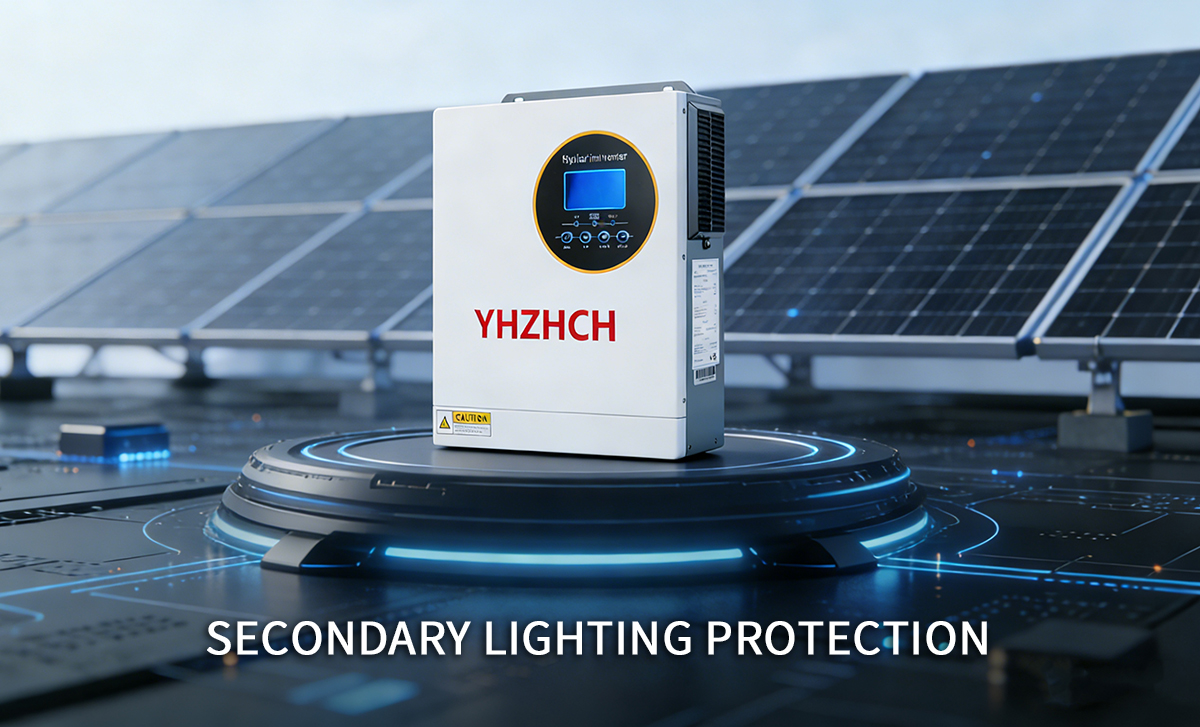
As the "heart" of photovoltaic system, solar inverter's market development, technology iteration and product upgrade are the core driving factors, which are not only derived from the overall development demand of photovoltaic industry, but also directly promoted by multi-dimensional factors such as policy, technology, market demand and cost. At the same time, the global consensus of carbon neutrality has laid the underlying logic for it. The following are the core drivers of sub-dimensions, covering industry, policy, technology, market and cost, which are clear in logic and fit the actual situation of the industry:
First, the global carbon neutrality goal+energy transformation, laying the foundation for the underlying demand drive
After the signing of the Paris Agreement, all countries in the world have made clear the time nodes of carbon neutrality and peak carbon dioxide emissions, and the transformation from fossil energy to renewable energy has become an irreversible trend. Photovoltaic, as a renewable energy with mature technology and declining installed cost, is the core of global energy transformation.
Solar inverter is the core equipment to realize the conversion from DC (photovoltaic panel output) to AC (grid-connected/load-used) in photovoltaic system. Without inverter, photovoltaic power cannot be used in grid-connected and off-grid, so the continuous growth of photovoltaic installed capacity directly determines the core market demand of inverter, and the goal of carbon neutrality is the fundamental underlying driving force for the growth of photovoltaic installed capacity.
At the same time, the global energy crisis has further accelerated the layout of local renewable energy sources such as photovoltaics in various countries, and forced the installation of photovoltaics to speed up, directly stimulating the demand for inverters.
Second, countries' photovoltaic industry policy support, strengthen market landing drive
The photovoltaic industry is a policy-driven industry. As the core supporting equipment of photovoltaic, the development of inverter is highly dependent on the photovoltaic installation policies, subsidy policies and grid-connected policies of various countries. The core policy support is as follows:
Subsidy and electricity price policy: some countries/regions give power subsidies and on-grid electricity price premiums to distributed photovoltaics and household photovoltaics (such as German household photovoltaic subsidies and Indian solar electricity price policies), which stimulate the installation of photovoltaic systems and indirectly stimulate the demand for inverters;
Grid-connection and consumption policy: countries gradually improve the grid-connection standards of photovoltaic (such as low voltage ride-through and reactive power regulation requirements), forcing inverters to upgrade grid-connection technology, and at the same time, the grid side supports the consumption of distributed photovoltaic, expanding the application scenarios of inverters;
Third, the upgrading of photovoltaic installed structure has given birth to the differentiated demand-driven inverter.
With the transformation of photovoltaic industry from centralized photovoltaic to centralized+distributed (household, industrial and commercial) two-wheel drive, and at the same time, photovoltaic application scenarios extend from ground power stations to photovoltaic building integration (BIPV), agriculture-light complementary, fishing-light complementary, and off-grid photovoltaic (remote areas/RV/outdoor), the market demand for inverters has been upgraded from "single specification" to "diversification and customization", which has promoted inverter technology iteration and product variety.
Distributed Photovoltaic Outbreak: Household and industrial photovoltaics have become the main growth force of global photovoltaic installation due to their flexible installation and quick return on investment, which has given birth to the demand for micro inverters and series inverters (compared with centralized inverters, series/micro inverters are more suitable for independent MPPT, shadow shielding and convenient installation in distributed scenes);
Popularization of off-grid/energy storage photovoltaic: the power shortage in remote areas of the world and the explosion of household energy storage demand (such as the increase of household storage and installation capacity in Europe) promote the development of off-grid inverters and energy storage inverters (hybrid inverters), which need to have the composite functions of "photovoltaic charging and discharging+energy storage battery management+seamless switching between grid connection and off-grid";
Fourth, technical iteration and innovation to promote the upgrading and driving of inverter products
The core performance indexes of inverter are conversion efficiency, reliability, intelligence and adaptability, and the upgrading of photovoltaic technology (such as photovoltaic panels and energy storage batteries), the progress of power electronics technology and the downstream demand for high efficiency, intelligence and safety of photovoltaic system jointly promote the technical iteration of inverter and become the core endogenous power for its development:
Progress in power electronics technology: the upgrading of IGBT/MOSFET and other power semiconductors (such as the application of wide band gap semiconductor SiC/GaN) greatly improves the conversion efficiency (from 96% to over 99%) and power density of the inverter, while reducing the loss and volume to meet the installation requirements of distributed scenes;
Optimization of MPPT technology: Maximum Power Point Tracking (MPPT) is the core function of inverter. The upgrading of MPPT technology with multiple MPPT channels and wide voltage range can effectively solve the problems of shading and uneven illumination of photovoltaic panels, improve the overall power generation of photovoltaic system and become the core competitiveness of inverter;
Intelligentization and networking: Internet of Things (IoT), big data and cloud computing technologies are combined with inverters to realize remote monitoring, fault diagnosis, intelligent scheduling and power adjustment of inverters, and at the same time meet the frequency modulation and peak shaving requirements of distribution networks, and improve the grid-connected stability of photovoltaic power. Intelligent inverters have become the mainstream trend;
Integration and multi-function: the inverter develops from "single inverter function" to "inverter+energy storage+charging+monitoring" integration, such as energy storage hybrid inverter and optical storage and charging machine, which adapts to the mainstream system architecture of "photovoltaic+energy storage" and meets the downstream demand for one-stop solutions;
Reliability and durability improvement: The service life of photovoltaic system is about 25 years. As the core equipment, the durability of inverter (such as protection grade IP65/IP67, high and low temperature resistance and corrosion resistance) has become the key to downstream selection, which promotes the innovation of materials, structure and heat dissipation technology of enterprises.
Five, the cost continues to decline, and the inverter market is popularized.
Cost is the core factor for the large-scale popularization of photovoltaic industry. The cost reduction of inverter is not only due to the scale and technological upgrading of its own industry, but also driven by the maturity of upstream supply chain and the demand for cost reduction of downstream photovoltaic systems. The cost reduction further expands the application scenarios and market coverage of inverter:
Cost reduction in large-scale production: the capacity expansion and large-scale production of inverter enterprises have diluted the fixed costs, and at the same time, the industry concentration has increased (the head enterprises occupy the main market share), forming a scale effect and promoting the price reduction of inverter products;
The upstream supply chain is mature: the localization and scale of inverter core components such as power semiconductors, capacitors and inductors reduce the procurement cost of core raw materials, while the industrialization of new semiconductors such as SiC/GaN gradually reduces their application costs and promotes the popularization of high-end inverters;
The above factors do not exist independently, but are interrelated and promote each other: the goal of carbon neutrality is the underlying logic, which determines the long-term development direction of photovoltaic industry; The policy of various countries is to ensure the landing and promote the actual growth of photovoltaic installed capacity; The upgrading of photovoltaic installation structure is market demand-oriented, which determines the product category and development direction of inverter; Technical iteration is an endogenous driving force to meet the differentiated and high-performance requirements of the market; Cost reduction is the key to large-scale popularization, which promotes the penetration of inverters into more markets and scenarios; The improvement of power grid standards is an external constraint, which forces the inverter technology to upgrade; The rise of emerging markets is an incremental space to further expand the market scale of inverters.
On the whole, the upgrading of its technology and products is to adapt to the growth of photovoltaic installed capacity, structural upgrading and power grid adaptation requirements, and the global consensus of carbon neutrality provides long-term and stable bottom support for this development trend.


