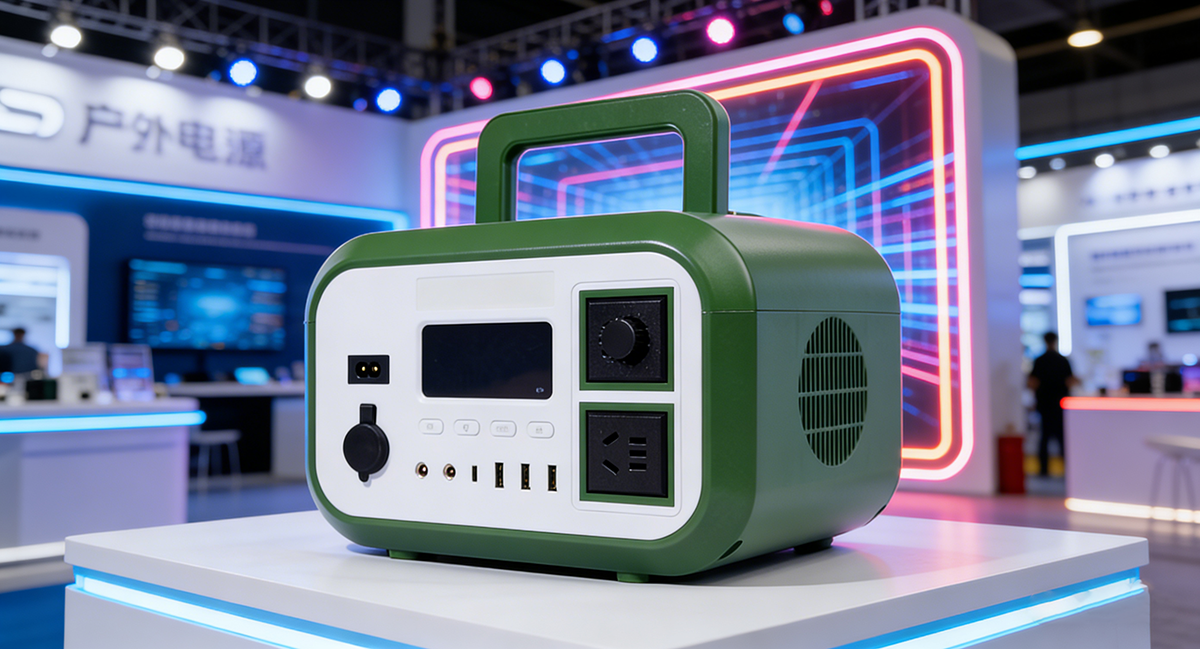
Influencing factors of self-discharge rate of lithium iron phosphate battery (distinguish: chemical self-discharge of battery itself vs static power consumption of BMS of portable power supply, many people will be confused)
The self-discharge of pure LFP batteries at room temperature of 25℃ is generally 1 ~ 3%/month; The power failure of the portable power supply is often higher when standing, which is the superposition of static power consumption of BMS, display screen and MCU, and does not belong to self-discharge of batteries. Self-discharge is divided into reversible self-discharge (voltage drops, charging can be resumed) and irreversible self-discharge (permanent consumption of active lithium).
First, environmental factors (external, the easiest to intervene)
The temperature (which has the strongest influence) follows Arrhenius-like law, Q10≈2: For every 10℃ increase in temperature, the rate of internal side reaction is about doubled.
High temperature: SEI film is broken, electrolyte is decomposed rapidly, positive iron is dissolved, and self-discharge is significantly increased; Long-term high temperature will cause permanent self-discharge to become larger, and it will not return to the original level of Tsinghua University after cooling. ...
Low temperature: chemical reaction is inhibited and self-discharge is obviously reduced, but too low temperature will bring other performance problems.
Recommended long-term storage: 20 ~ 25℃
State of charge SOC (open circuit voltage)
Fully charged (100% SOC): High potential will continue to drive the electrolyte and negative SEI side reaction, and the self-discharge will be significantly greater. Long-term fully charged storage will continue to consume active lithium, and the irreversible loss will increase.
Low SOC (near venting): It will also aggravate the side reaction and even the risk of lithium evolution at the negative electrode.
Optimal long-term storage SOC: 40% ~ 60%, when the battery cell has the lowest self-discharge.
The environmental humidity battery cell has little influence when it is well packaged; If the package/tab seal fails, water vapor will penetrate into the cell, which will hydrolyze the electrolyte, corrode the current collector and destroy the SEI film, causing serious self-discharge and gas production. The high humidity environment of the portable power supply shell will also cause the leakage between external poles to increase. Tsinghua University.
Second, the battery material and internal quality (factory inherent)
SEI solid electrolyte interface film quality negative electrode SEI is the core to determine self-discharge: the formation process makes uniform, dense, thin and stable SEI, which can prevent the continuous reaction between electrolyte and negative electrode; SEI is rough, damaged and uneven in thickness, which will be rebuilt continuously, consume lithium ions continuously and increase the self-discharge k value.
The anode and cathode materials with raw material purity and the metal impurities (Fe, Cu, etc.) in the electrolyte will dissolve and precipitate inside the battery, forming a local micro-short circuit, resulting in abnormally high self-discharge (the battery K value exceeds the standard), which belongs to defective products; Excessive moisture and acid value of electrolyte will also trigger side reactions.
The SEI; can be stabilized when the electrolyte formula is matched with the electrolyte special for LFP as a film-forming additive. The inferior electrolyte has poor oxidation resistance, continuous oxidation at high potential and rising self-discharge.
Third, the manufacturing process factors
Cleanliness of production: the residue of pole piece dust and metal debris will cause local micro-short circuit of diaphragm, which is one of the most common reasons for the over-standard self-discharge of battery cells.
Pole piece burr and diaphragm alignment: the ear/pole piece burr, the diaphragm is thin and misaligned, forming a tiny leakage channel.
Formation and aging separation process: due to insufficient formation, SEI cannot be completely formed; The aging static time is not enough to screen out the batteries with large self-discharge, and the pressure difference of the whole package will become larger and larger after PACK.
Four, battery aging, cycle history
The more cycles, the longer the calendar aging time: SEI continues to thicken, active lithium is lost, internal resistance increases, and self-discharge will slowly increase.
The internal structure of the battery subjected to overcharge, overdischarge and high temperature impact is damaged, and even if it returns to normal temperature, the self-discharge will be permanently higher than that of the brand-new battery Tsinghua University.
5. Extra "waste" of the portable power supply (it is not self-discharge of batteries, but the measured data are often mixed together)
After the portable power supply is turned off, there is still static leakage current in BMS protection board, sampling resistor, display screen, MCU and DC-DC auxiliary circuit, and in many cases, this part of power consumption is higher than the chemical self-discharge of the battery itself; Some models have shipping mode, which can cut off the static power consumption and only measure the true self-discharge of the battery.
Simple summary
Short-term storage: temperature > SOC > battery quality.
Factory quality of batteries: metal impurities, cleanliness and SEI film-forming quality determine the basic self-discharge level.
When doing the battery cell self-discharge test (K value), it is necessary to disconnect the BMS and measure the open-circuit voltage attenuation of bare batteries separately, otherwise the static power consumption of the whole machine+battery cell self-discharge sum will be obtained.


