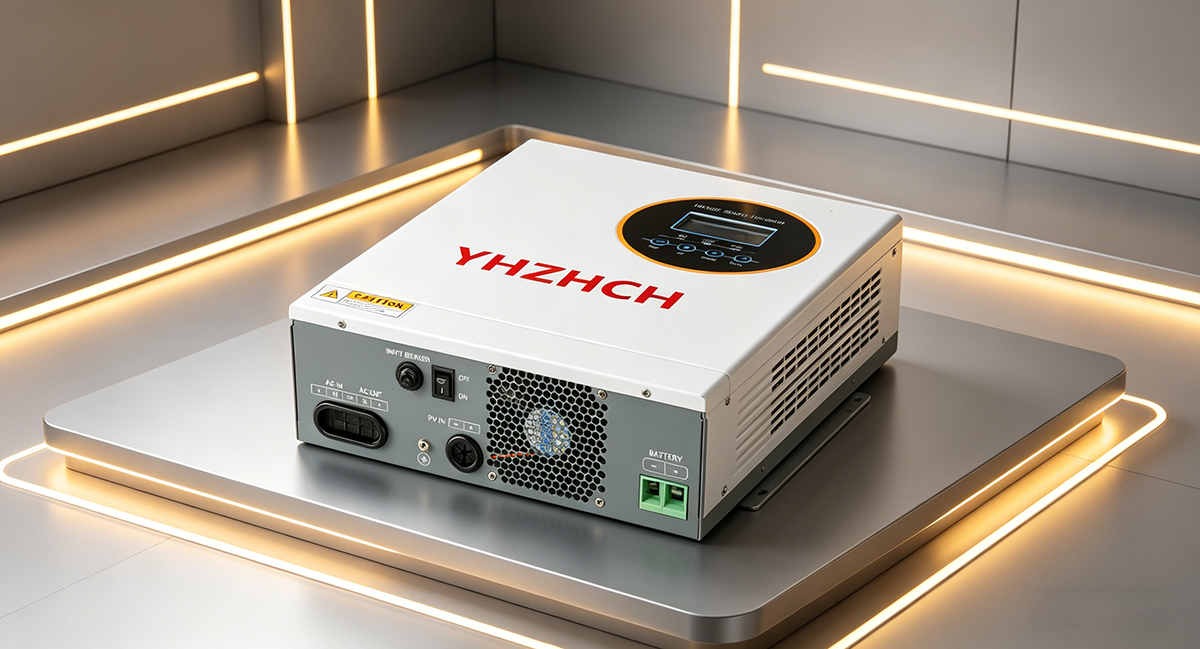
Environmental adaptation of solar inverter means that the inverter collects environmental parameters such as illumination, temperature, grid voltage, wind speed and battery state in real time, and dynamically adjusts MPPT, modulation strategy, protection threshold and output control, instead of a fixed set of parameters. The core advantages are divided into power generation performance, equipment reliability, grid adaptation, operation and maintenance, and economy.
1. Improve power generation and maximize photovoltaic output power.
Dynamic MPPT tracking: when the light intensity and component temperature change, the maximum power point is corrected in real time to avoid the mismatch of fixed MPPT parameters in cloudy, morning and evening and shaded scenes and reduce power loss; Multi-branch photovoltaic can also adapt to the differences of each string independently.
Adapt to the temperature characteristics of photovoltaic module: the output of photovoltaic panel drifts with temperature, and the adaptive strategy can adjust the working point according to the panel temperature, reduce the risk of voltage exceeding the limit at high temperature, and make full use of the open circuit voltage at low temperature.
Respond to rapid light fluctuation (clouds passing by), speed up tracking response and reduce power fluctuation.
2. Improve equipment reliability, reduce failure risk and prolong service life.
Temperature adaptive load shedding: when the temperature of the power device inside the inverter is high, the output power is dynamically reduced instead of directly stopping; The low temperature environment automatically corrects the threshold of start-up and protection to avoid low temperature misoperation.
Adaptive protection threshold: dynamically adjust the setting values of overvoltage, undervoltage, over-frequency and over-current protection according to the environment and power grid conditions, so as to reduce false tripping and ensure reliable protection in case of failure.
Reduce the frequent impact of power devices: smoothly adjust the output when the light changes suddenly, reduce the stress of IGBT/MOSFET and delay aging.
3. Enhance grid compatibility and meet grid-connected specifications.
Power grid voltage/frequency self-adaptation: when the power grid fluctuates, the reactive power output and active power are dynamically adjusted, with the ability of low voltage ride-through and high voltage ride-through, which supports the stability of the power grid and avoids the grid from being disconnected when the power grid is slightly disturbed.
Adaptive harmonic suppression strategy: with the change of load and power grid impedance, the filter control is adjusted in real time to reduce grid-connected harmonics and ensure power quality.
Scene adaptation of weak current network: identify the impedance change of power network, modify the parameters of control loop, and prevent the inverter from resonant oscillation.
4. Reduce operation and maintenance costs and improve system stability.
Reduce manual field parameter setting: traditional inverters need engineers to set parameters manually according to the field environment; The adaptive strategy is automatically adjusted online, and there is no need to manually change parameters in different regions and seasons.
Identify abnormal working conditions in advance: judge component attenuation, local shading and abnormal wiring in combination with environmental parameters, assist fault diagnosis, give early warning and reduce downtime.
Adapting to complex scenes: different environments such as mountain photovoltaic, roof distributed, desert high temperature, alpine region, etc., the same type of inverter relies on adaptive strategy to adapt without customizing hardware.
5. Improve security
Dynamically adjust the working range of the device in high temperature environment to reduce the risk of overheating and fire;
When the environmental humidity is high, the start-stop logic can be adjusted to avoid short circuit caused by operation under condensation condition.
6. Synergistic expansion advantages of energy storage (hybrid inverter with energy storage)
If it is an integrated optical storage inverter, the adaptive strategy can combine ambient light+battery temperature/SOC at the same time, coordinate photovoltaic charging and discharging control, protect the battery and improve the utilization rate of the whole optical storage system.
Brief summary
Bottom line: Compared with fixed parameter control, environmental parameter adaptive strategy can generate more power, reduce tripping, prolong device life, adapt to weak power grid/complex climate, reduce the workload of field debugging and operation and maintenance, and improve the comprehensive benefits of the whole photovoltaic system.


