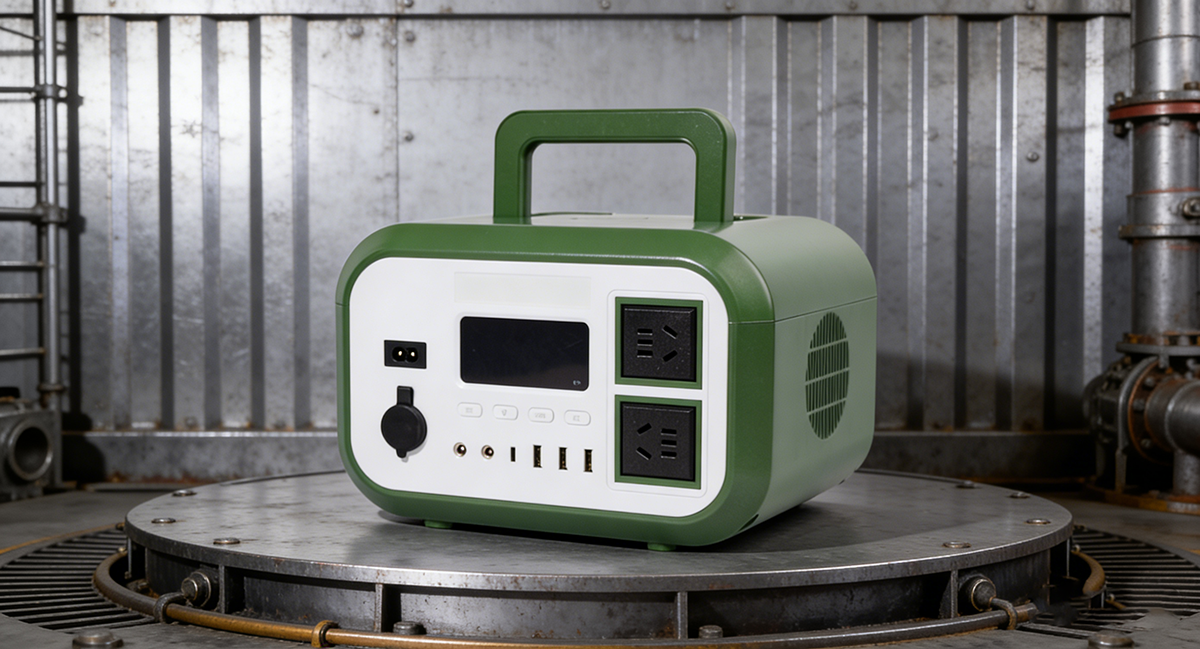
Six common methods for judging the remaining power of portable power supply
First, LED indicator judgment (the most common)
Segmented light grid (4 lights are the most common)
4 All lights on: ≈75%~100%
Turn on 3 lights: ≈50%~75%
Turn on 2 lights: ≈25%~50%
Light 1: ≈5%~25%
Flashing single lamp: low battery, close to emptying.
Marquee/breathing light: The speed of light rolling roughly reflects the margin, and the lower the power, the slower the rolling, and the stroboscopic reminder.
Disadvantages: It is only a rough interval, and the percentage cannot be accurately determined. The division of lamp segments of different manufacturers is inconsistent.
Second, the digital display (accurate and intuitive)
With LCD/digital tube, it can directly display * * remaining percentage (%) * * or remaining Wh/mAh.
Some high-end models are displayed at the same time: output voltage, current and output power.
Advantages: accurate reading; Disadvantages: standby power consumption is slightly higher and the cost is higher.
Third, external monitoring of mobile phone/power meter (the most accurate, suitable for measuring conversion rate)
1. USB voltage ammeter (power meter)
Inserted between the portable power outlet and the mobile phone, real-time reading:
No-load voltage to judge the electric quantity:
Fully charged 3.7V battery cells are boosted by 5V, and the no-load output is about 5.1V: The lower the power, the lower the no-load voltage, and when the power is exhausted, it will fall to the protection cut-off voltage.
When charging, the cumulative output power is counted, and the remaining total capacity is calculated reversely.
2. Charge detection APP data cable
With a dedicated intelligent data cable, the mobile APP can view the output power of the charging treasure in real time and estimate the remaining power.
4. Reverse estimation according to the charging time.
Knowing the total capacity of portable power supply, input fast charging power
Remaining power ≈ 1 Charged duration Theoretical chargeable capacity/total capacity of portable power supply
For example: 20000mAh portable power supply, input power of 18W, and total charging time is about 6.5 hours; After charging for 2 hours, you can roughly calculate the charge amount and push back the rest.
Disadvantages: Affected by input power fluctuation and heating current limiting, the error is too large.
Five, the internal battery voltage judgment (disassembly professional method)
The single energy-saving core of lithium battery is nominally 3.7V, fully charged at 4.2V, and the cut-off discharge is about 2.75~3.0V
4.10~4.20V: fully charged
3.85~4.10V: Sufficient power.
3.60~3.85V: medium power.
3.30~3.60V: low battery.
< <3.2V: battery cell is easily damaged due to power loss.
A multimeter is needed to measure the voltage at both ends of the battery cell, which is suitable for maintenance and self-made power supply, but not for ordinary users.
Six, the use of load discharge experience judgment
With fixed load (such as small fan, LED light):
When fully charged, the output voltage is stable and the load works smoothly.
When the power is low, the on-load voltage drops obviously, the load speed/brightness drops, and portable movies can easily trigger the low-voltage protection to turn off.
It is only roughly qualitative and cannot be quantified.
Supplement: Comparison of advantages and disadvantages of various methods
form
The accuracy and convenience of the method are suitable for people.
Rough interval of LED indicator light ★★★★ Look at ordinary daily users casually.
The percentage of digital screens is very high ★★★☆ Pursuing intuitive and accurate users.
The USB power meter is extremely high ★★☆☆
The multimeter measures extremely high battery cells ★☆☆☆
The estimation error of charging time is large ☆☆☆☆☆ Temporary rough estimation.


