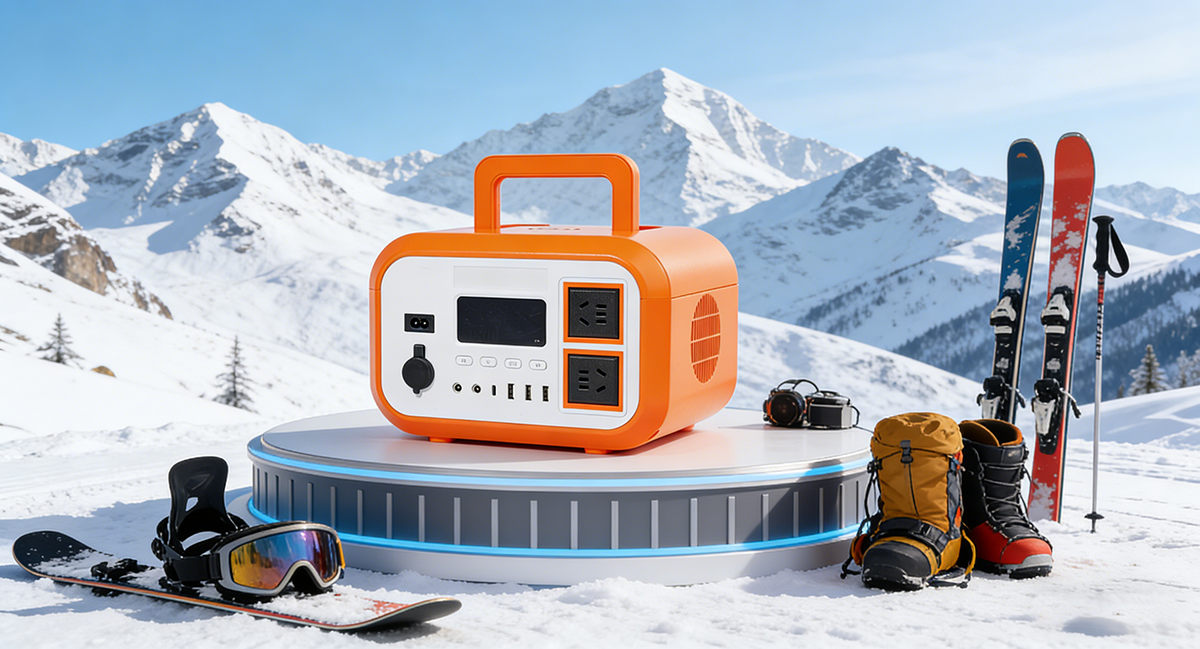
Methods of improving the conversion rate of portable power supply
Conversion rate refers to the efficiency from input electric energy to output available electric energy (loss mainly comes from circuits, wires, heating, batteries, etc.), which can be divided into three categories: hardware design, usage habits and accessories collocation, taking into account professional transformation and daily use optimization.
1. Hardware-circuit design optimization (product development/modification level)
Choose high efficiency chips
The loss can be reduced by 3%~8%; Select the main control chip with wide rated working range and high light load efficiency to avoid the efficiency collapse under small current.
Optimize PCB and circuit
Shorten the high current wiring, thicken the copper foil, and reduce the copper loss of the line; Power loop and signal loop are separated in layout to reduce interference and extra heat.
Reduce the loss of switch tube
Choose low internal resistance MOS tube to reduce conduction loss; Reasonable configuration of driving circuit and resonance parameters can reduce switching loss.
Selection and matching of battery cells
Priority is given to lithium batteries with high rate and low internal resistance. The greater the internal resistance of the battery core, the more heat generated by high current discharge and the lower the efficiency.
Multi-series batteries ensure the consistency of capacity and internal resistance, and avoid the overall loss caused by backward single battery.
Optimize heat dissipation structure
Thermal grease, radiating fins and openings are added to control the working temperature. The high temperature of charging treasure will greatly improve the internal resistance and reduce the efficiency. For every 10℃ increase in temperature, the extra loss will increase obviously.
Second, daily use optimization (ordinary users are the easiest to land)
Match the appropriate output current to avoid heavy/light load.
Most medium loads (50%~70% rated current) have the highest efficiency;
Don't discharge at full load and high power for a long time (such as continuous output at full load of 65W), the loss will increase sharply and the fever will be serious;
Don't stand by/discharge at very low current (such as small current charging of Bluetooth headset). Under light load, the static loss of the chip accounts for a high proportion and the conversion rate is low.
Control working temperature
Avoid using/charging in high temperature environment (exposure to the sun, in the car, under the bed);
Don't play with high-power equipment while charging, and don't superimpose multiple devices to output at the same time to reduce fever.
Reasonable selection of input/output voltage gear
Support PD/QC fast charging: give priority to low voltage and large current at the same power, and reduce the voltage difference of voltage conversion. The greater the pressure difference, the higher the loss of step-up and step-down circuit.
Reduce idle no-load loss
Don't turn off the switch for a long time; In the no-load state, the main control and indicator lights will continue to consume electricity, which will lower the overall comprehensive conversion rate.
Third, the optimization of accessories (wire, charger)
Use low-loss data lines
For regular data lines with thick core and small line resistance, short lines (20~50cm) are better than long lines;
The voltage drop of inferior fine wire and aging wire is large, and the greater the current, the more obvious the loss, which directly lowers the overall conversion efficiency.
Matching input charger
When charging the portable power supply, use a regular charger with matching specifications and small ripple; The voltage of inferior fast charging head is unstable, which will increase the charging loss;
Try to charge with the nominal optimal input gear of the charging treasure (if 18W input is supported, use the 18W charger).
Reduce the transfer and expand the head
Avoid multi-stage adapters and expanding docking stations in series, and each additional adapter will increase contact resistance and loss.
Fourth, other details
routine maintenance
Clean up the dust and oxide layer on the interface. Poor interface contact will produce contact resistance, heat and increase the loss; Replace the battery core in time when it is seriously aged.
Avoid too many loads in parallel.
Multi-port simultaneous output will make the power supply work in a complex load range, and the efficiency will generally decline. Try to use a single port.


