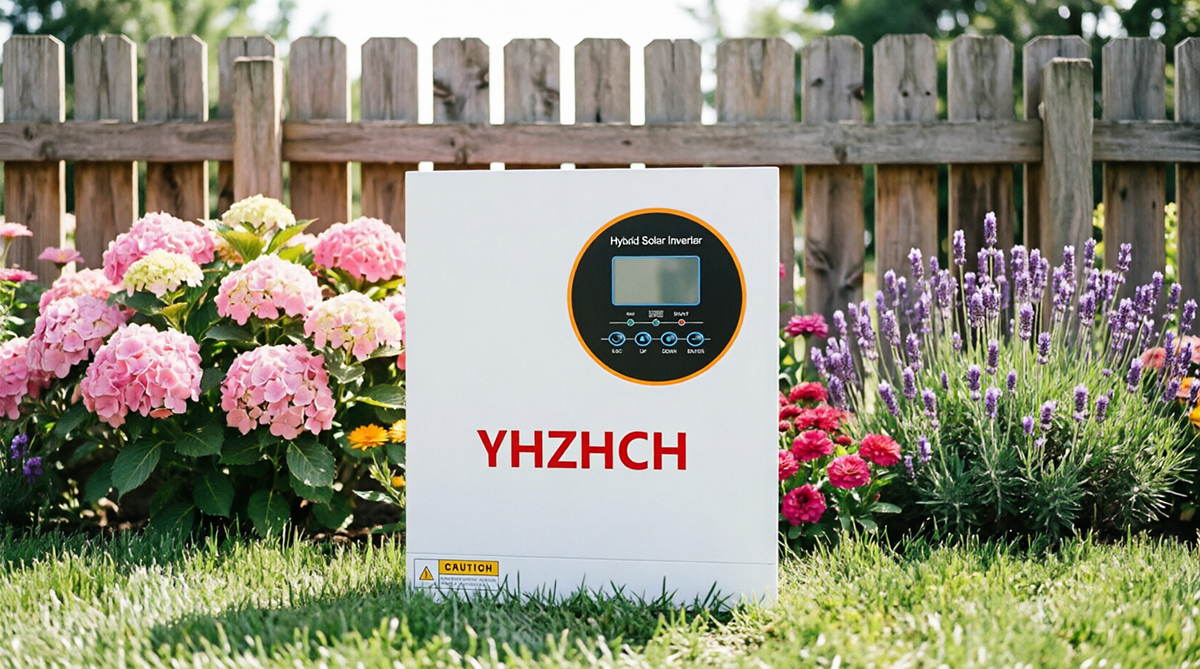
Solar inverter: reliability > conversion efficiency, and different scenes have different weights.
Give the core conclusion first:
Long-term household/industrial and commercial photovoltaic and power station projects: reliability first, efficiency second;
The roof space is extremely small, and the ultimate pursuit of power generation: the efficiency weight is increased, but the foundation reliability cannot be sacrificed;
Inferior inverter with low reliability and high efficiency are empty talk.
1. Why is reliability more important?
1. The inverter is the "heart" of the photovoltaic system, and the whole set stops when it breaks down.
Photovoltaic panels generally have a service life of 25-30 years and a very low failure rate;
But the inverter is the only high-power electronic equipment, including capacitors, chips, fans and switching devices, and it is the component with the highest failure rate in the whole system.
Inverter failure → the whole roof/whole square array does not generate electricity at all;
Remote roofs and mountain power stations are extremely expensive to repair, and even no one repairs them for several months;
Frequent downtime, repair, the loss of power generation, far more than the high efficiency to earn more electricity.
2. Decay and life determine the full-cycle benefits.
High-quality and reliable inverter: design life is 10-15 years, long-term stability, temperature rise, high and low temperature resistance, and thunderstorm power grid fluctuation resistance;
Low-cost and high-gimmick "high-efficiency model": the materials are shrunk, the capacitors are inferior, and the heat dissipation is poor. In 3-5 years, the efficiency is reduced, the machine crashes, and the machine explodes, and the later maintenance cost explodes.
3. The hidden cost is extremely high
Poor efficiency means earning less;
The poor reliability is: downtime loss+maintenance fee+labor+accessories fee+power generation interruption, which directly loses money.
Second, the true value of conversion efficiency (not as big as you think)
The full-load efficiency of mainstream first-line inverters is generally 97.5% ~ 98.5%, and the gap between big brands is very small;
Most daily photovoltaics work at half load/light load, and the manufacturer's standard "peak efficiency" is not used at all in daily life;
For every 1% difference in efficiency, the annual power generation gap is about 0.8%, which is converted into tens to hundreds of dollars a year.
Only with high-density installed capacity, full power generation throughout the year, and large power stations, high efficiency can open up obvious benefits.
Simple accounting:
Two inverters, A is reliable and durable, with an efficiency of 97.5%; B the virtual standard is 98.8% efficient, with short warranty and perishable.
As long as B shuts down for 10 days a year, all the electricity bills saved in more than one year will be lost.
Third, the two weights are divided into scene selection.
1. Household photovoltaic (90% users)
Priority: brand, quality assurance, three prevention, heat dissipation, failure rate and local after-sales.
As long as the efficiency is ≥97.5%, it is completely sufficient, and it is not necessary to pursue the ultimate 98%+
Recommendation: First-line brand, complete machine warranty for 5-10 years, strong power grid adaptability, high lightning protection and waterproof level.
2. Industrial and commercial roofs/large photovoltaic power stations
First guarantee: long-term operation stability, MPPT tracking accuracy, dust resistance and high temperature resistance, convenient operation and maintenance.
Re-selection: high conversion efficiency, low load efficiency optimization and cluster monitoring.
Under the large-scale installation, high efficiency and reliability are indispensable, but reliability is the bottom line.
3. Very small space/self-use electricity ratio is extremely high
The roof is limited, so you can't add more photovoltaic panels, so you need to drain every kilowatt hour.
You can appropriately increase the priority of efficiency, but never choose products with poor brand names and high efficiency.
Fourth, the selection of practical judgment criteria
Look at reliability (key)
Brand reputation, market share, repair rate;
The warranty period of the whole machine (starting at ≥5 years, preferably 10 years);
Heat dissipation structure, capacitor specification, IP65 or above protection level;
Adaptability to weak current network, thunderstorm and high temperature environment of power grid.
Look at efficiency (secondary)
Focus on weighted efficiency (closer to daily life), not just peak efficiency;
Household users do not need to blindly compare 98%+, and the first-line mainstream parameters are sufficient.


