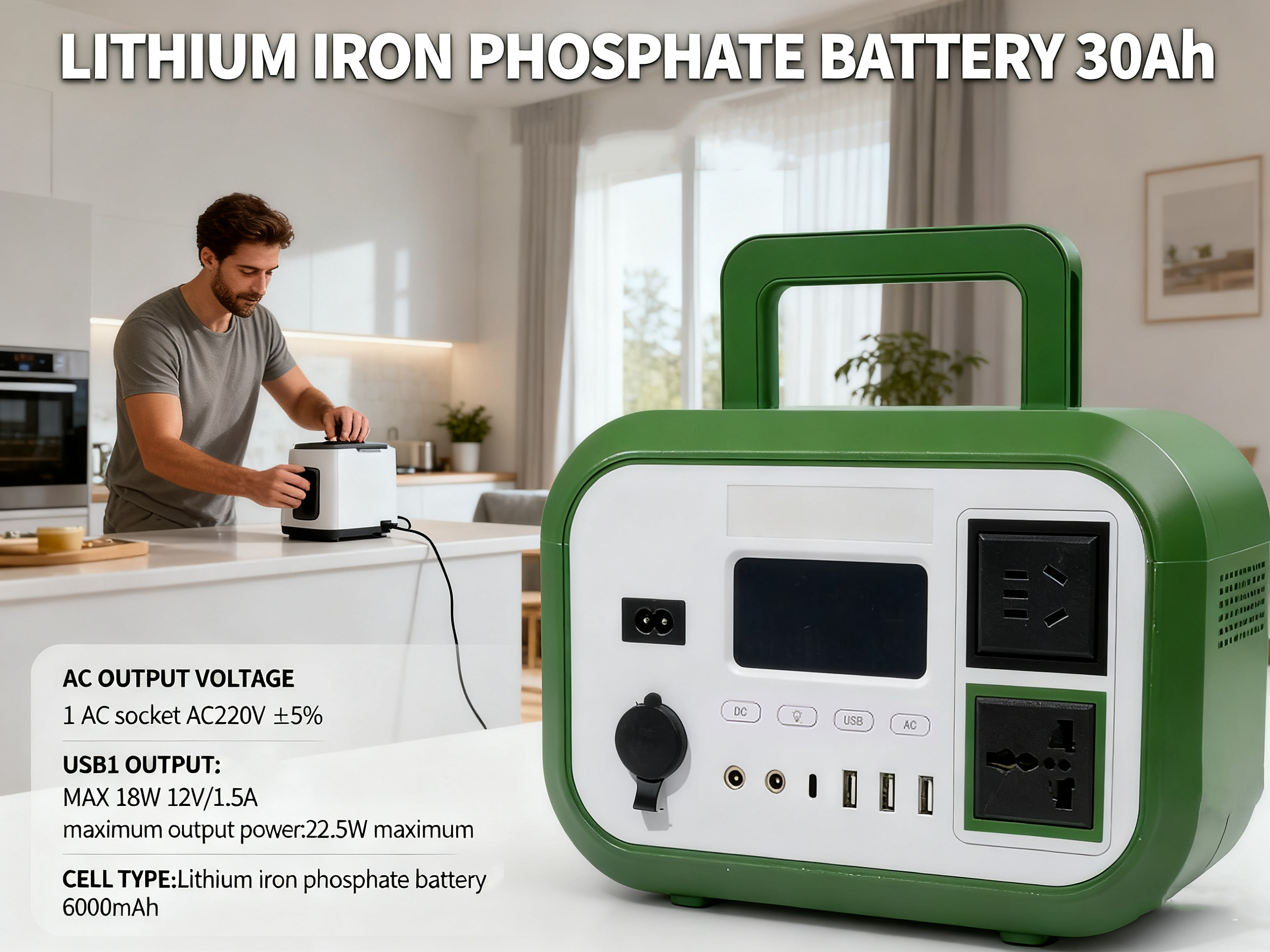
Bottom line: Support for AC output = it can be directly plugged into home/office appliances (220V), but not support for AC = it can only charge mobile phones and small digital devices (USB/DC), which has completely different purposes.
What can I charge?
| Contrast term | Portable power supply supporting AC output | AC output is not supported (USB/DC only). |
|---|---|---|
| Output type | 220V alternating current (AC)+ USB/DC | Only USB, DC DC |
Notebook, projector, mini refrigerator, fan, rice cooker, small household appliances. | Mobile phone, tablet, earphone, charging treasure, small lamp | |
| inner structure | With inverter (direct current of battery → 220V alternating current) | No inverter, only battery+buck circuit. |
| Volume weight | Bigger, heavier and more expensive | Small, light and cheap |
| power | Usually 100W~3000W+ | Generally ≤ 100W (mostly 10W~65W) |
| usage scenario | Outdoor camping, power failure emergency, stall, car office | Daily trip, short trip, emergency power supply |
Second, popular understanding
With AC = small mobile socket: it is equivalent to "moving out" the socket at home, and most household appliances can be used.
Without AC = large charging treasure: only low-power digital devices can be charged, and household appliances cannot be plugged in.
Third, how to choose specifically?
Take notebook, projector, small household appliances, power failure emergency → choose AC output.
Only recharge the mobile phone, earphone and tablet, and pursue lightness and cheapness → choose no AC (pure USB/DC).


